
AI Dungeon vs LiveTale: What Is the Difference, and Which Should You Play?
AI Dungeon is a freeform AI text adventure where anything you type can happen. LiveTale is a solo RPG with an AI game master, real dice, and illustrated scenes. This honest comparison explains the difference and helps you pick the right one for how you like to play.
The fastest way to feel the difference is to look at the same kind of moment in both games. So before the deep comparison, here are the three differences you can see at a glance.
Illustrated comic vs. text-only novel
This is the difference you notice in the first ten seconds. A LiveTale scene plays like an illustrated comic: every scene gets a painted frame in a consistent art style, the characters in it speak in comic-style bubbles with their own portraits, and the header tracks where you are in the story, scene by scene, act by act.
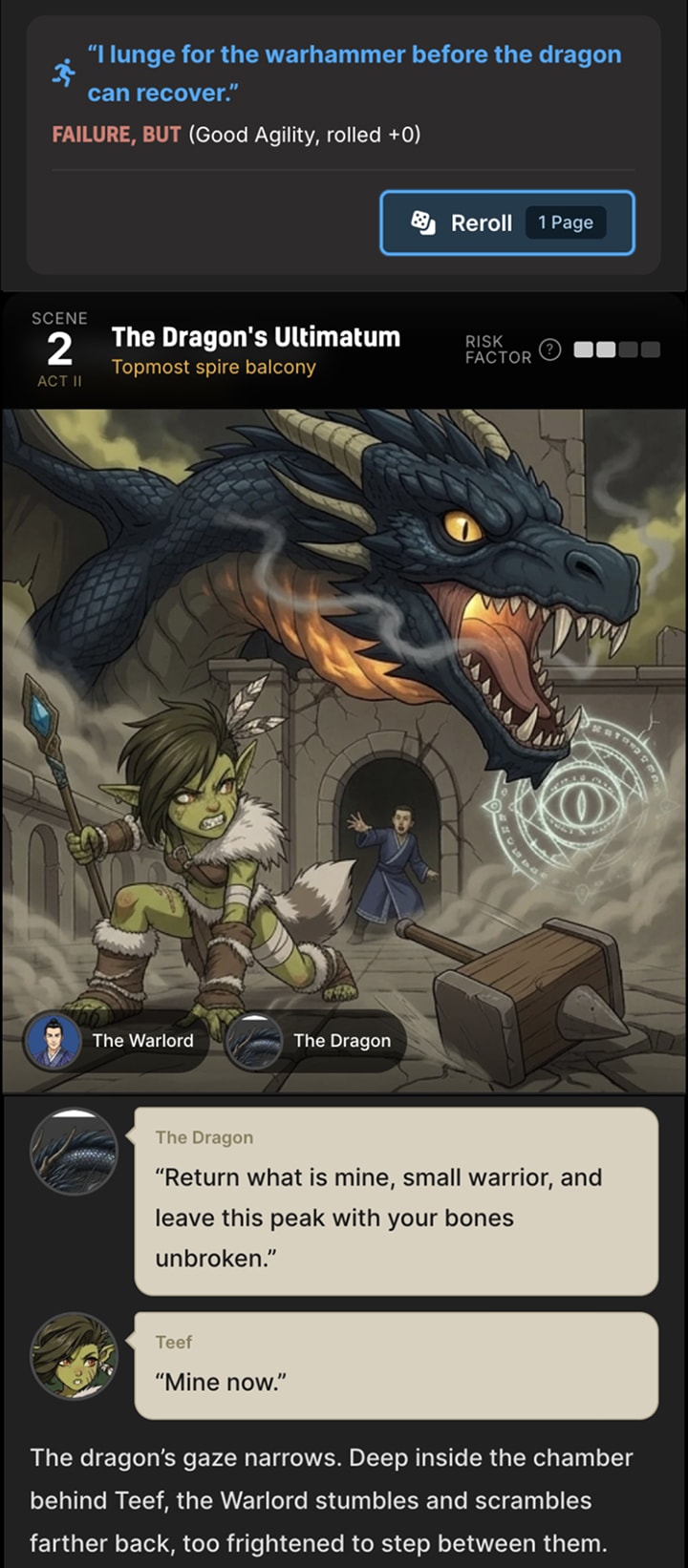
The same kind of moment in AI Dungeon is prose. You type, the AI writes the next passage, and the story accumulates as a scrolling text document, closer to co-writing a novel than to reading a comic:
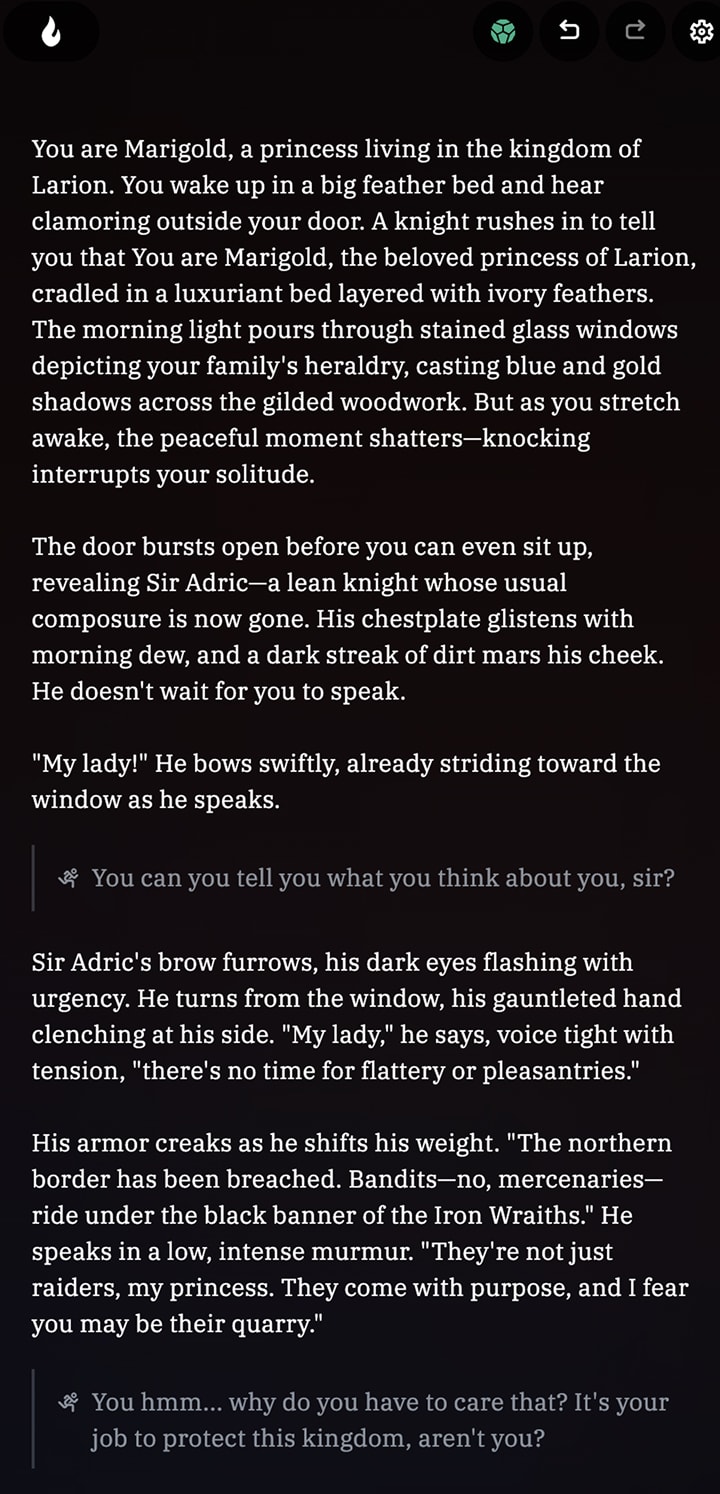
Neither presentation is wrong, but they are aimed at different people. If a wall of text is what you love, AI Dungeon gives you exactly that. If you want to see your story unfold, and share panels of it like comic pages, that is what LiveTale is built around.
LiveTale is all about your hero
The second visible difference: LiveTale puts a real character sheet at the center of play. Your hero has attributes, skills with honest ratings, gifts, and faults, and that sheet is not decoration. Every risky thing you attempt is tested against it.
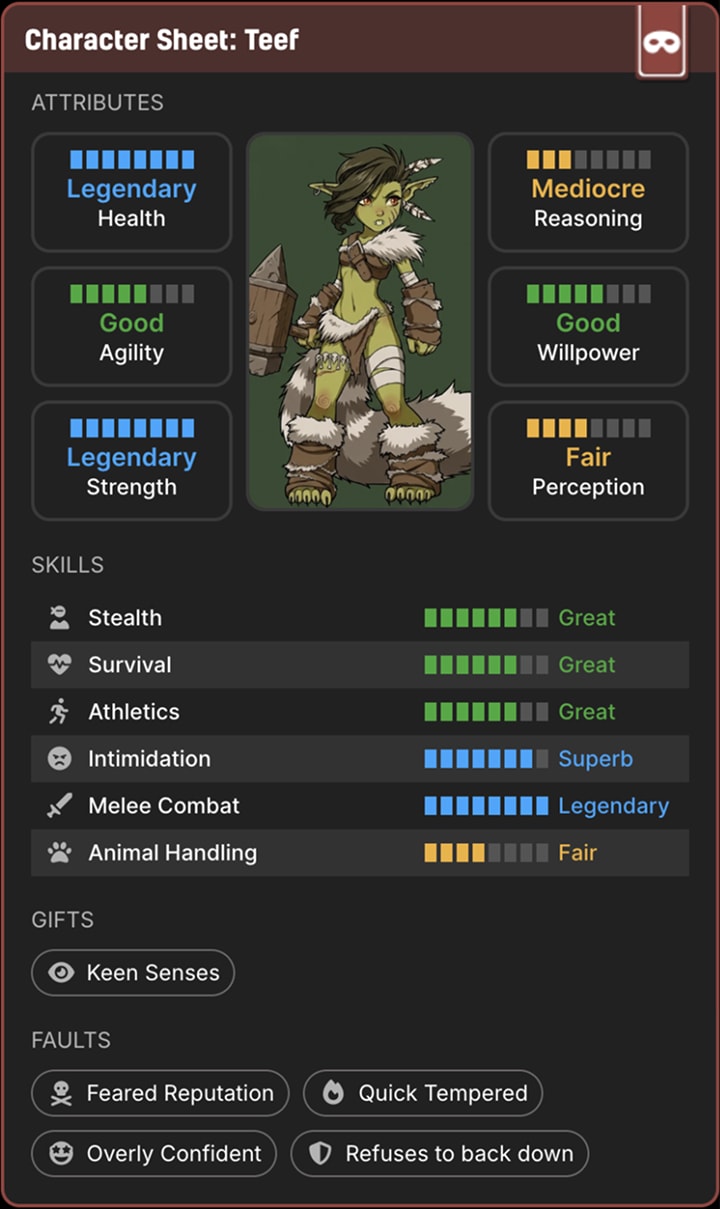
Notice the faults: Quick Tempered, Overly Confident, Refuses to back down. In LiveTale those are not flavor text; they are what makes a hero worth playing, and the game master plays to them. In AI Dungeon your character is whatever the current text says they are, which is freeing, but it also means nothing anchors them: no ratings, no limits, and nothing that makes "Teef would never do that" true in a way the game enforces.
Writing the story vs. playing a hero with real skills
The third difference is what your typing actually does. In AI Dungeon, your input is authorship: you write what happens next, and the AI continues it. In LiveTale, your input is an attempt: you declare what your hero tries, and their actual skills plus visible dice decide how it goes.
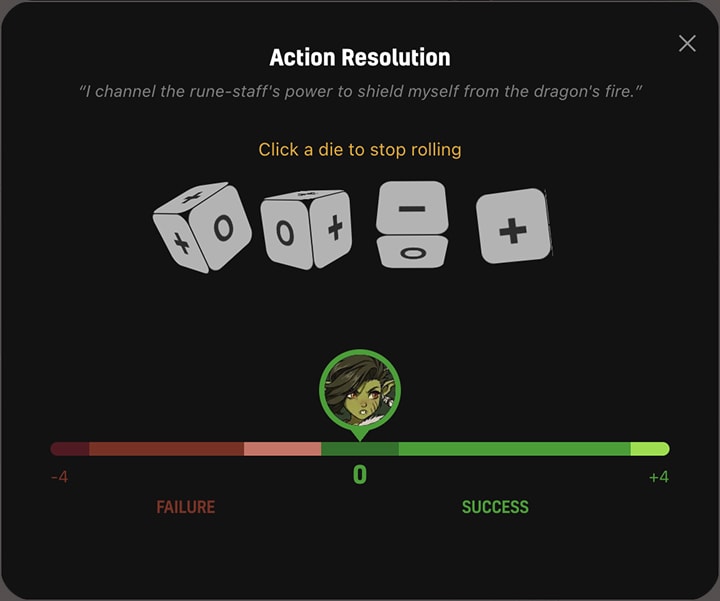
"I channel the rune-staff's power to shield myself from the dragon's fire" is not a sentence the AI simply accepts. It is an attempt, weighed against your hero's sheet, resolved by dice you can watch land. Sometimes you get "FAILURE, BUT", and the story bends somewhere you did not plan. That is the tabletop feeling, and it is the single biggest thing that separates the two games.
LiveTale vs AI Dungeon at a glance
| AI Dungeon | LiveTale | |
|---|---|---|
| What it is | Freeform AI text adventure | Solo RPG with an AI game master |
| Your input | Anything; the AI continues it | Actions and questions your character attempts |
| Dice and rules | None by default | Fudge dice vs your skills; d100 oracle for questions |
| Can you fail? | Only if you write it | Yes; dice make failure real and the story adapts |
| Character sheet | Optional, freeform text | Built in: skills, attributes, gifts, faults, inventory |
| Quests and progression | Freeform | Tracked quests, rewards, chapters with real endings |
| Visuals | Optional AI images | Every scene illustrated; portraits for you and NPCs |
| World lore | Story cards you maintain | A structured Lore Book the game master treats as canon |
| Community content | Huge scenario library | The Tavern: recruit player-made heroes for free |
| Pricing | Free tier; subscriptions for stronger models | Free to start with a 15-Page Welcome Pass; earn more Pages by sharing heroes and tales in the Tavern, or buy Page bundles when you want more, no subscription |
Which is better for playing D&D-style campaigns solo?
LiveTale, and this is the use case it was built for. If what you miss is the tabletop experience, a character you invest in, dice that scare you a little, quests, loot, and a game master with a plan, then a freeform text tool asks you to supply all of that discipline yourself. LiveTale's game master handles pacing, consequences, and continuity, and your whole campaign stays organized: scene summaries, a journal of illustrated scenes, and chapters you can conclude and pick back up later.
If what you actually want is interactive fiction with no rules at all, closer to lucid dreaming than to a game, AI Dungeon serves that better. Freedom is the feature, and LiveTale deliberately trades some of it away for stakes.
What about long stories and AI memory?
Both games have to deal with the same technical reality: AI models can only read a limited amount of text at once. AI Dungeon gives you manual tools, like story cards, to pin the facts you care about. LiveTale manages memory for you: the engine keeps structured state (your character, quests, inventory, the characters you have met and what they want) plus a running story history, so the game master still knows in scene 40 what you did in scene 3. Players have run LiveTale adventures for hundreds of scenes. If you enjoy curating an AI's memory by hand, AI Dungeon's tools are flexible; if you would rather just play, LiveTale does the bookkeeping.
So which one should you play?
Pick AI Dungeon if you want maximum freedom, freeform collaborative writing, a huge scenario library, and you are happy being the one who keeps the story honest.
Pick LiveTale if you want to play rather than write: a solo tabletop RPG with an AI game master, real dice, real failure, persistent characters and quests, and every scene illustrated.
Plenty of people enjoy both, for different moods. But if you have ever quit an AI story game because it agreed with you one too many times, that is the exact itch LiveTale was designed to scratch. You can try it free, no subscription, and your first adventure is a character sheet and one scene away.