
How to Play a Narrative RPG Without a GM: The AI-Powered Oracle Explained
No group, no Game Master, no problem. Learn how solo roleplayers use a yes/no oracle to run tabletop RPG stories alone, and how an AI-powered oracle removes the busywork while keeping the dice honest.
You want to play a tabletop RPG tonight. There is no group, no Dungeon Master, and no calendar slot that works for five adults. Solo roleplayers solved this problem decades ago with a deceptively simple tool called the oracle, and AI has recently made it dramatically better.
What is an oracle in solo roleplaying?
In a normal game of Dungeons & Dragons, Pathfinder, or any other tabletop RPG, the Game Master answers your questions about the world. Is the door locked? Is anyone watching? Is there a rope in the shed? When you play solo, nobody holds that knowledge, so solo RPG players replace the GM's rulings with an oracle: a system that answers yes/no questions with a dice roll.
The idea has a long pedigree. The Mythic Game Master Emulator built an entire GM-less play style around a fate chart back in 2003. Ironsworn bakes "Ask the Oracle" into its core rules. Countless one-page solo engines, journaling games, and GM emulator supplements refine the same loop, and people run them with everything from a paper notebook to a virtual tabletop like Roll20 or Foundry VTT. The loop is always the same:
- Ask a yes/no question about the world.
- Decide how likely a "yes" would be.
- Roll the dice and read the answer.
- Fold the answer into the story and keep playing.
That little loop is what lets one person play D&D-style adventures alone without knowing what happens next.
The rule that makes it work: anything not established is fair game
Here is the key principle, and it is worth internalizing because it changes how you read every scene: if the story has not clearly established something, it is undecided, and undecided things belong to the oracle.
The narration described a cabin, a storm, and a locked door. It said nothing about what is in the drawers, whether the roof has a hatch, or who else knows about this place. All of that is unwritten. You are allowed to ask about any of it, which means you can discover new items, new exits, even new characters that no one, including you, planned in advance. The scene keeps unfolding beyond its opening narration, one question at a time.
This is what separates solo roleplaying from writing fiction. A writer decides. A player asks, rolls, and finds out.
A worked example: monsters at the window, and no weapon in sight
Let's make it concrete with a scene from LiveTale, our AI-powered solo RPG.
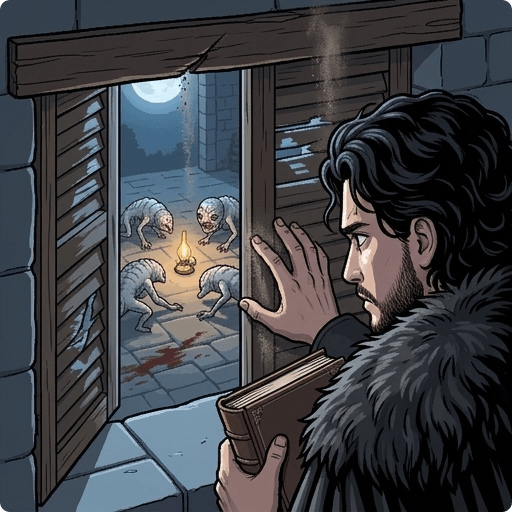
Your character spots monsters massing outside the window. Charging out with bare fists sounds like a short story with a bad ending. What you want is a bow and arrows to thin them out from up here. But the narration never gave you one, and in a GM-led game you would now ask the Dungeon Master: "Is there anything here I could use?"
Solo, you put the same question to the oracle:
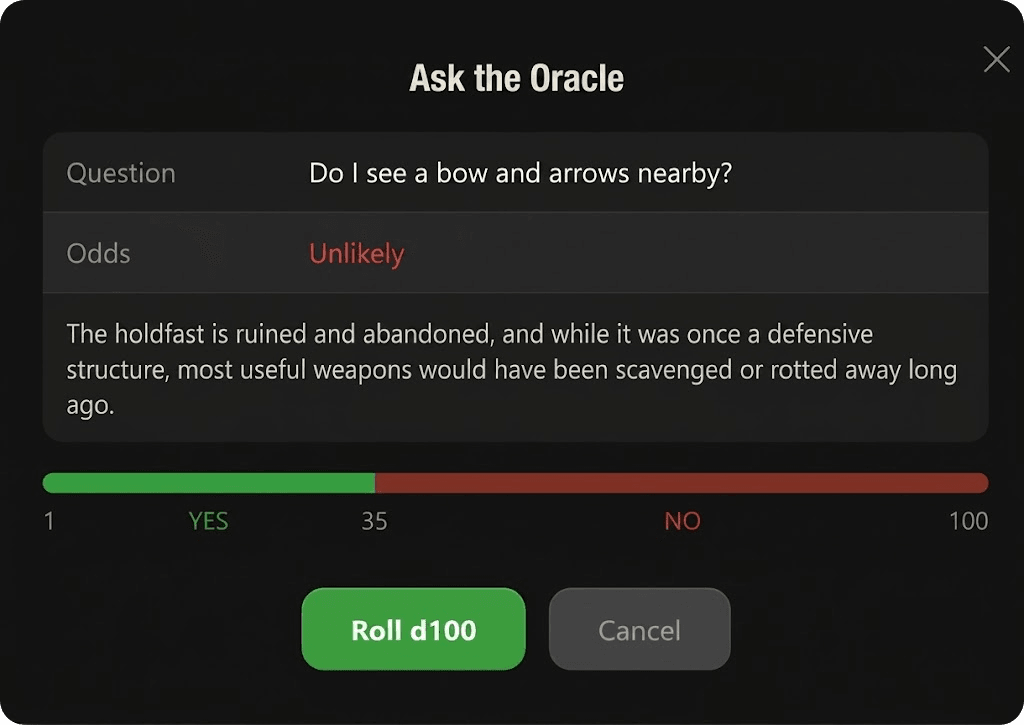
The oracle weighs how plausible that is in the fiction. An abandoned hunter's cabin? Finding a bow is likely. A pristine office cubicle? Very unlikely. In LiveTale the odds land on one of five levels, from Very Unlikely to Very Likely, each with its own threshold on a d100 roll, the same basic math the Mythic fate chart made famous. Then the die rolls where you can see it.
Roll under the threshold and the answer is yes:
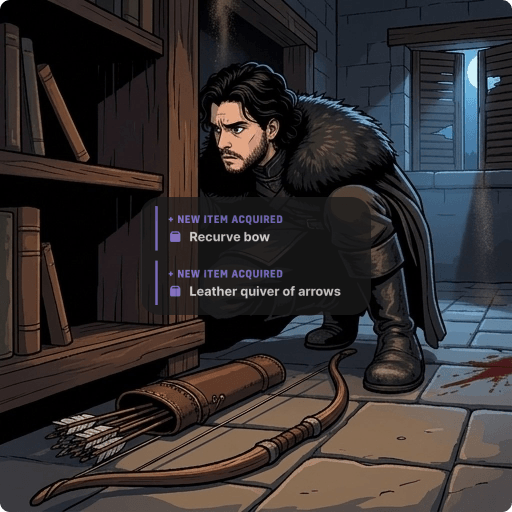
The bow exists now. Not because you decreed it, but because you asked, the odds were fair, and the dice said yes. That distinction is the entire magic trick of solo RPGs: you stay a player, surprised by your own story, instead of an author deciding everything. And when the roll lands in the extreme bands, the oracle answers with an exceptional yes or an exceptional no, and the story leans into it: not just a bow, but a quiver of silver-tipped arrows beside it.
What does AI actually change?
Classic paper oracles work, but they make you do all the clerical labor: pick the odds yourself, consult the chart, roll, then interpret a bare "yes" into fiction, then write it all down in your journal. Many would-be solo players bounce off that overhead before the fun starts.
An AI-powered oracle absorbs exactly that busywork:
- It sets the odds from context. The AI has read your whole story, so "can I find a bow nearby?" gets judged against where you actually are, not a generic table.
- It narrates the answer. Instead of a flat "yes," you get the bow woven into the scene: where it hangs, what condition it is in, what its presence implies.
- It remembers. The bow stays in your inventory and your story. No journaling required.
Equally important is what the AI does not do: it does not skip the dice. Pure AI text adventures in the AI Dungeon style will hand you anything you type, which feels powerful for about ten minutes and then deflates, because a world that always says yes has no tension. An oracle-driven game keeps the d100 between you and your wishes. The AI interprets the roll; it never overrules it.
Try it: the oracle is built into LiveTale
LiveTale integrates this oracle system directly into play. Every scene has a Question tab next to your Action input: type any yes/no question, watch the odds appear, watch the d100 roll, and watch the answer become part of the narration, the world, and your inventory. No fate charts to look up, no bookkeeping, and no group required.
If you have ever wanted to play D&D alone, bounced off a GM emulator's tables, or wished your AI story game had real stakes, the oracle loop is the thing to try. Ask the world a question. Let the dice answer.
Cheers,
The LiveTale Team