
Adaptive Storytelling: The Storyteller Now Reads the Room
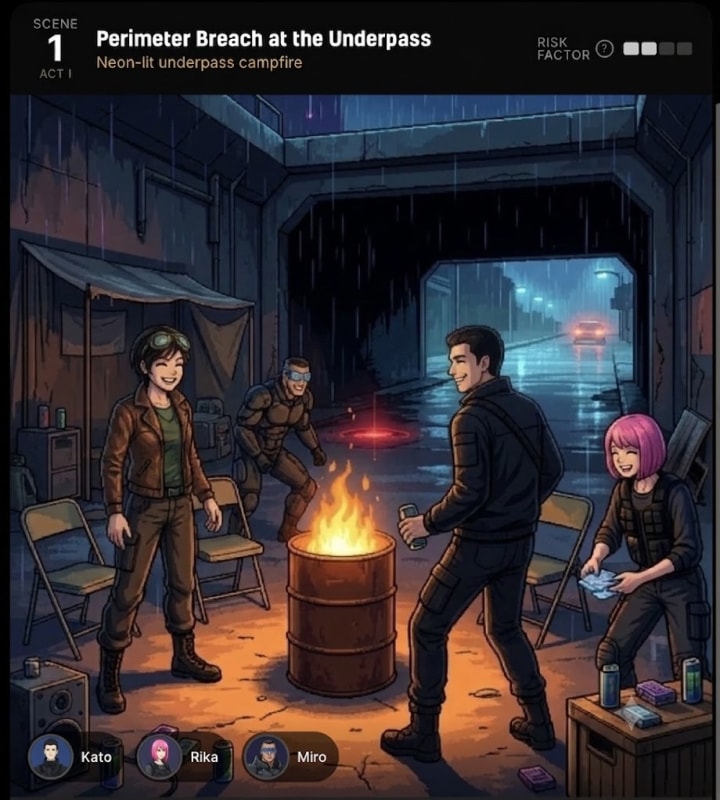
Not every moment needs a sword drawn. The storyteller now picks up the intention behind what you write - advancing the plot, exploring, or just talking by the fire - and shapes the scene to match, instead of throwing another obstacle at you.
Some of you told us the same thing: there's never a quiet moment. You'd try to sit down with a companion, ask about their past, share a drink after a hard-won fight - and two beats later something would interrupt, attack, or drag the story onward. That's fixed. The storyteller now reads the intention behind what you write, and shapes the story around it.
Every story needs more than obstacles
An AI storyteller's instinct, left unchecked, is to challenge you - every beat, forever. Ask a friend about her family, and a stranger bursts through the door. Win a desperate battle, and before the dust settles a new threat is already rising. It keeps the story moving, but it flattens it: all tension, no texture, and never a moment to breathe.
The best game masters don't run stories that way. They read the table. When a player leans into a conversation, they let it play out. When the party wins big, they give the victory a beat to land before the next complication. That's what we've taught the storyteller to do.
The storyteller picks up your intention
There's no new button and nothing to configure. The storyteller now reads each thing you type - every action and every question - for what you're trying to do:
- Advancing the plot? You get momentum - progress, revelations, doors opening.
- Exploring? You get the world - detail, discovery, atmosphere.
- Talking to someone? You get the conversation - the NPC engages, opens up, answers and asks back. And crucially, the scene stays a conversation: no ambush, no interruption, no "suddenly, a scream from outside" to hurry you along.
- Reflecting or resting? The story slows down with you.
The pacing rules follow suit. A conversation held over several beats is no longer treated as a stalled scene that needs rescuing - it's recognized as the point. And after a quest is completed or a battle won, the next beat gives the victory room to land instead of immediately raising a new problem.
How to set up the scene you want
The only skill you need is the one you already have: say what you actually want to do. The storyteller takes its cue from your words.
Say your hero just survived a brutal fight alongside Yuki, and you want the quiet aftermath - not the next quest. Type something like:
I sit down next to Yuki by the fire, pass her the last of the bread, and ask what she'll do when all this is over.
That's a social beat, and the storyteller treats it as one. Yuki answers. Maybe she deflects, maybe she finally opens up, maybe she turns the question back on you - but the scene stays at the fire, with her, for as long as you keep it there. Follow up with more conversation and it deepens; stand up and grab your sword and the story picks the pace right back up. You're steering, beat by beat, just by writing naturally.
And when you want to shape a whole scene in advance, use the "Have something specific in mind?" box at any scene transition:
We rest at the safehouse overnight. Mira finally tells me the truth about her brother.
The next scene will open there and stay in that register - a night of rest and a long-overdue conversation, not an ambush at the door.
Your story, your tempo
Quiet moments aren't filler. They're where companions become friends, where victories mean something, and where the next chapter's stakes get their weight. The storyteller now knows that - so give it a try tonight: win a fight, sit down by the fire, and ask your companion something you've been wondering for ten scenes.
They just might answer.